
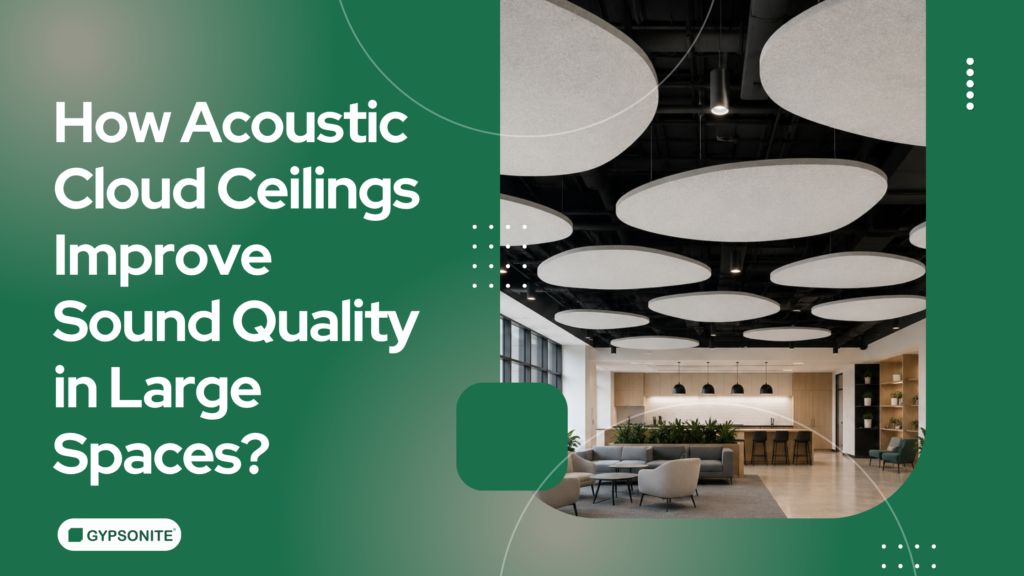
The design of visually appealing and acoustically pleasing spaces is more crucial than ever in today’s architectural world. From a busy corporate office, a large auditorium, an open-plan restaurant, or a modern classroom, sound management is a key factor in creating a user experience. This is where acoustic cloud ceiling systems come into play.
Acoustic cloud panels are also a great choice for spaces that require high acoustical performance along with design flexibility, especially in larger areas where both aesthetics and acoustics matter.
In this article, we will learn about the benefits acoustic cloud ceilings offer in big spaces and why they are chosen over traditional ceiling solutions and how businesses and designers can use them to enhance their spaces.
What is an acoustic cloud ceiling?
An acoustic cloud ceiling is a suspended ceiling system consisting of many individual panels or “clouds” that hang below the main ceiling of the structure. These clouds are designed to absorb the sound waves, dampen the reverberation, and improve the intelligibility of speech. Acoustic cloud systems are installed in free-floating layers or patterns and offer targeted acoustic performance, unlike traditional flat ceilings or basic drop ceiling systems.
Acoustic cloud ceilings have the following characteristics:
- Lightweight yet durable acoustic panels
- Customizable shapes, sizes, and layouts
- High sound-absorption coefficients
- Architecturally interesting appearance
- Easy integration with lighting and HVAC systems
Why is sound quality important in large spaces?
Acoustic challenges naturally abound in large areas. Across large expanses of reflective surfaces such as concrete, glass, or hard floor, sound may often lead to the following:
- Echo and reverberation
- Poor speech intelligibility
- Increased noise levels
- Lower concentration and comfort level
- Trouble interacting with others socially or at work
Such acoustic issues have a negative effect on productivity, comfort, and experience. For example, if there is unclear sound in a corporate training hall, it can cause misunderstandings.
How do acoustic cloud ceilings enhance sound quality?
1. Reduce Reverberation Time
When sound waves reflect off hard surfaces and remain in an environment, that’s called reverberation. In high-ceilinged rooms in large buildings with reflective surfaces, reverberation can cause confusion and noise. Absorbing these sounds before they bounce back into the room helps to improve acoustic cloud ceilings.
Porous surfaces of acoustic panels absorb the sound energy and considerably reduce the reverberation time. This translates to faster sound absorption, leading to a more focused and controlled sound environment.
2. Improve Speech Intelligibility
Clear communication is essential in situations such as lecture halls, conference centers, airports, places of worship, etc. Acoustic cloud ceilings provide better intelligibility of speech by eliminating reflections to ensure acoustic clarity. Cloud panels can be intelligently placed to direct sound to areas of concern above seating or around sources to enhance acoustics throughout the space.
3. Enhance Noise Control
Open spaces can be distracting and tiring, particularly with background noise. Acoustic cloud ceilings absorb a considerable amount of noise, resulting in a more peaceful and pleasant atmosphere. This is particularly useful in open-plan offices, dining spaces, and multi-purpose halls.
Acoustic panels can help to reduce the overall level of noise in a room, making it easier for people to communicate without resorting to shouting, which can help to improve productivity and reduce stress.
4. Flexibility in Design and Installation
The most outstanding benefit of acoustic cloud ceilings is that they are designed to suit various purposes. They can be molded, placed, and painted to fit in the architectural design. Cloud panels are not attached to the whole ceiling surface, like the conventional acoustic panels; they provide a dynamic visual impact.
Cloud panels can be combined with lighting features or strategically positioned to keep spaces open and still reduce noise. This flexibility allows acoustic solutions to not detract from the total design concept.
5. Targeted Acoustic Solutions
Acoustic cloud ceilings can be placed in designated areas where sound disturbances are a problem. To avoid covering an entire ceiling, panels can be grouped over meeting spaces, seating clusters, or performance areas.
This specific solution is more economical and acoustically effective, meaning that the designer can optimize the level of acoustical control in a particular area without over-treating the space.
Where Are Acoustic Cloud Ceilings Most Effective?
- Educational Facilities: Classrooms, lecture theaters, and libraries benefit greatly from improved speech clarity and reduced noise.
- Healthcare Environments: Hospitals and clinics need calm and quiet environments. Acoustic ceilings produce quiet environments for patients and staff.
- Corporate Offices: Open-plan offices can be noisy and distracting. Enhanced collaboration and control of sound are achieved by cloud ceilings.
- Hospitality & Dining: Restaurants and cafés often struggle with high noise levels. Acoustic cloud panels can contribute to lively and pleasant acoustics.
- Retail Stores & Showrooms: Music, announcements, and customer conversations vie for attention. A well-designed acoustical design enhances the shopping experience.
- Cultural and Event Spaces: Auditoriums, galleries, and community halls demand high sound control for presentations and performances.
Choosing the Right Acoustic Cloud Ceiling
There are various types of acoustic cloud ceiling, each with different specifications that are suitable for various purposes and spaces according to the design objectives. Take into account the following:
- Acoustic Performance Ratings: Choose panels with high NRC (Noise Reduction Coefficient).
- Material Quality: Durable, fire-rated, and eco-friendly materials for long life and safety.
- Design Compatibility – Select shapes, colors, and layouts to match interior design.
- Evolutionary space: Systems that can be easily reconfigured are great for spaces that are evolving.
Talking to acoustic experts and designers will help you determine the best answer for your needs.
Why Use Gypsonite Acoustic Cloud Ceilings?
Gypsonite’s specialties include performance and design-class ceiling and wall solutions. Our acoustic cloud ceiling systems are designed to provide the most effective sound control without sacrificing style. From its innovative design to its diverse applications, Gypsonite provides the following:
- High-performance acoustic materials
- Laminate or solid wood floor options and finishes
- Professional consultation and support
- Complements architectural features
By using Gypsonite’s cutting-edge acoustic technology, you can turn any space into a sound-controlled room that promotes productivity, collaboration, and comfort.
Transform Your Space with Gypsonite.
An acoustic cloud ceiling is one of the most effective and most visually appealing solutions for significantly enhancing sound quality in large spaces. Acoustic ceiling panels provide you with the ability to secure the best speech clarity, lower reverberation, and achieve balanced acoustics solutions that fit your requirements.
Contact Gypsonite today to explore the ideal acoustic cloud ceiling solutions for your project. Our experts will lead you from design to installation.