
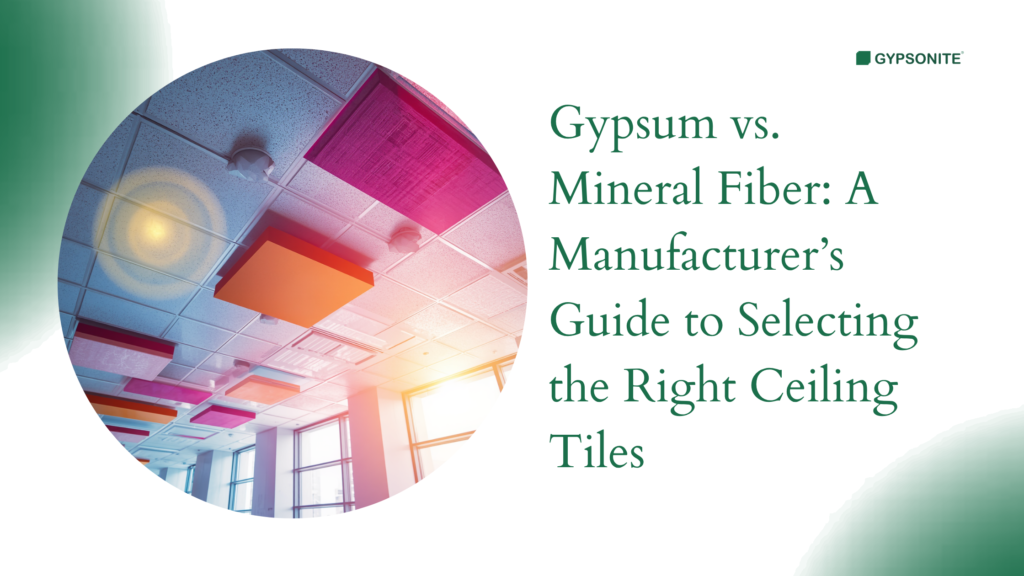
Choosing the right ceiling tile is one of the most crucial decisions interior designers, builders, and ceiling materials suppliers in India must make. Ceiling tiles affect not only appearance, but also acoustics, durability, fire resistance, thermal performance, and maintenance cost.
Gypsum and mineral fiber are two of the most popular types of ceiling materials used in commercial and residential ceilings. Both have distinguishing characteristics and specific benefits, but they also are very different in terms of composition, performance, and environmental suitability.
Whether you’re building an office, a school, a hospital, a hotel, or a home, there are a number of properties that we will test and produce a comparison chart for between gypsum and mineral fiber ceiling tiles: So, if you want a reliable ceiling solution partner, Gypsonite provides a variety of high-quality ceiling products that cater to different architectural requirements.
What are gypsum ceiling tiles?
Gypsum ceiling tiles are composed of a natural mineral compound called calcium sulfate dihydrate. They are made using gypsum, water, and additives, shaped into panels, and dried and cured. Gypsum tiles are used for smooth finishes, clean lines, and high fire resistance. The beauty and durability of these tiles make them popular in contemporary interior design.
What Are Mineral Fiber Ceiling Tiles?
Mineral fiber ceiling tiles are composed of mineral wool, recycled materials, and binders. These raw materials are turned into lightweight panels that have a porous structure. Mineral fiber tiles are generally found in commercial and institutional installations where acoustic performance and economy are important.
1. Aesthetic Appeal & Finish
Gypsum Ceiling Tiles
Gypsum tiles offer a sleek and elegant effect that aligns with modern design aesthetics. They can be found in different styles, including flat, simple surfaces or patterned or textured finishes. Gypsum can easily be incorporated into a concealed grid system and can be painted or finished to complement any interior design theme.
Ideal for modern interiors, showrooms, luxury interiors, hotel interiors, and residential interiors, where a clean look is desired.
Mineral Fiber Ceiling Tiles
Mineral fiber tiles often feature a bit of texture and softness to their surface. Usually made in a basic white or off-white color, these tiles tend to have a functional appearance, making them suitable for institutional or large commercial settings like schools, hospitals, and offices. Custom aesthetics are less available than gypsum.
Ideal for: Functional interiors where quality finish is not as important as performance and budget.
2. Acoustic Performance
Gypsum Ceiling Tiles
Gypsum tiles offer good sound reflection and moderate acoustic control. When it comes to noise absorption characteristics, however, they are generally inferior to those of mineral fiber, unless designed so with perforations or acoustic backing.
Ideal for: Lobbies, corridors, residential areas, and places where acoustics are needed but not a core requirement.
Mini Fiber Ceiling Tiles
Mineral fiber has outstanding acoustics. The sound absorption is high because of the porous structure, so as to prevent the sound from being propagated throughout the room. This renders mineral fiber an ideal choice for classrooms, conference halls, auditoriums, and open-plan office spaces where sound management is crucial.
Ideal for: High-performance acoustic environments.
3. Fire Resistance & Safety
While both gypsum and mineral fiber tiles are fire resistant, there are differences:
Gypsum Ceiling Tiles
Gypsum is fire resistant because the water is chemically bound. It can be used to slow the fire and heat spread rate and make it a safe choice to use in a safety-related design. In commercial buildings, the gypsum tiles may be rated to comply with strict fire codes.
Mineral Fiber Ceiling Tiles
Mineral fiber tiles do not burn and have good fire resistance. They contain minerals that make them non-combustible and slow-burning. The fire performance may vary with the binders and the quality of the manufacture, however.
Tip: Both materials provide good fire safety, but product certification should be used to determine the exact rating.
4. Durability & Maintenance
Gypsum Ceiling Tiles
Gypsum tiles are hard and sturdily built, thus offering very hard surface toughness. However, they are more susceptible to moisture damage if installed in areas with high humidity, unless specially treated. Regular cleaning and touch-ups are straightforward thanks to the smooth finish.
Keep in mind: Use moisture-resistant gypsum boards in areas such as bathrooms and kitchens.
Mineral Fiber Ceiling Tiles
Lightweight but less durable, mineral fiber can have broken edges and may sag with age in moist environments. They are also likely to stain and are not as easy to clean thoroughly. But, if individual tiles are damaged, they can be removed and replaced without having to remove the entire ceiling.
Ideal for: Dry environments with intermittent tile replacement not affecting use.
5. Thermal Performance
Gypsum Ceiling Tiles
Gypsum has good thermal mass, which allows the material to absorb and release heat over time. Can add to the energy efficiency in conditioned spaces.
Mineral Fiber Ceiling Tiles
Mineral fiber is also porous, which means that it provides thermal insulation properties. Its effect is typically not as strong as the effect of specialized thermal insulation panels, but it provides some degree of thermal control.
6. Installation Considerations
Gypsum Ceiling Tiles
Gypsum tiles can sometimes require a more detailed installation procedure. They need to be cut and matched precisely to achieve the smoothness and perfect appearance of gypsum ceilings. Generally, these are heavier tiles and need to be supported by the proper grid.
Mineral Fiber Ceiling Tiles
Mineral fiber tiles are light and convenient to handle. They can easily be installed in a standard ceiling grid without much effort. Some of the reasons mineral fiber is popular in commercial projects are due to quick installation and replacement.
Tips: Both types of ceilings require professional installation to ensure optimal performance and finish.
7. Environmental Impact & Sustainability
Gypsum Ceiling Tiles
Gypsum is a naturally occurring mineral, and many of the modern types of tile have recycled gypsum in them. They can be recycled at the end of their useful life and are becoming more energy efficient in their manufacturing.
Mineral Fiber Ceiling Tiles
Mineral fiber tiles can generally contain a high recycled content. It is a relatively environmentally friendly method of production, using industrial by-products like slag and fly ash. Binders and coatings, however, may have an impact on recyclability.
Conclusion
The most important thing to take into account when choosing the right ceiling tile is the functional and design needs of your project. If you are looking for a premium look, seamless and smooth finishes, high fire resistance, and durability, then gypsum ceiling tiles are a great option. They are perfect for interior use in homes, luxury offices, showrooms, hotels, and places where appearance is paramount.
Mineral fiber ceiling tile is more appropriate for projects that require high acoustics, installation speed, and economy, such as large commercial, educational, and institutional projects. No matter which material you select, working with a trusted ceiling materials supplier in India guarantees high-quality products, expertise, and solutions customized to your project’s performance and design needs.