
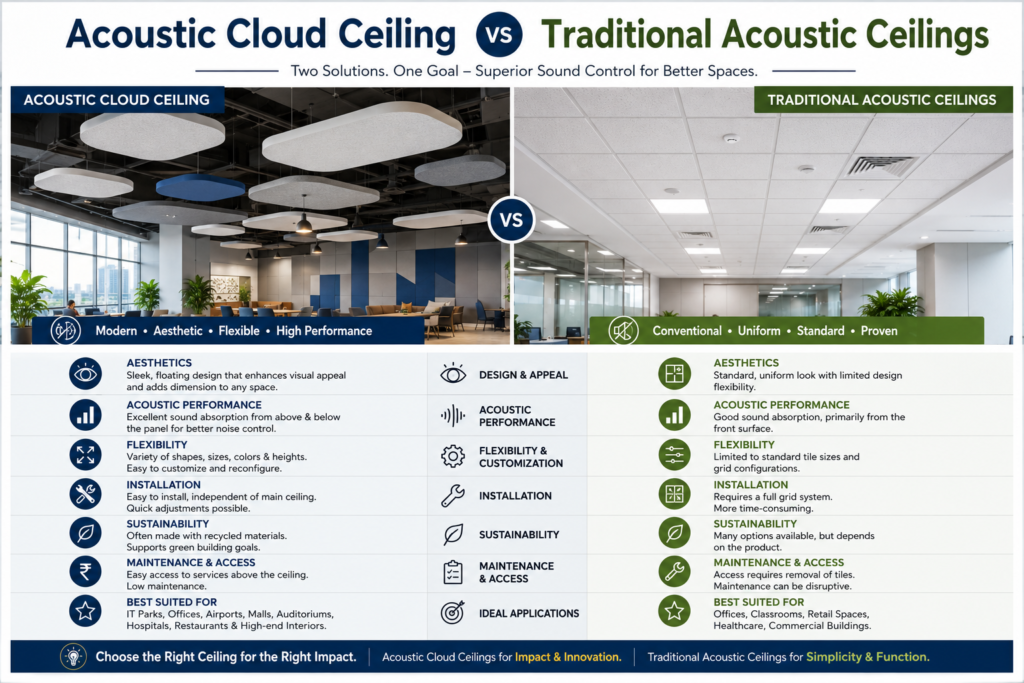
Acoustic ceilings play a significant role in noise control, comfort, and aesthetics in commercial and residential buildings. Today, two popular choices for designers and architects are acoustic cloud ceiling systems and acoustic ceilings. They are both good for acoustics, but they are very different in terms of performance, design flexibility, installation, and price.
Whether you’re upgrading an existing space or planning a new build, understanding the differences between these ceiling systems will help you make the right choice for functionality, budget, and style.
What is an acoustic cloud ceiling?
Acoustic cloud ceilings are a type of hanging panel that hangs below the actual ceiling and can be used in various patterns or designs. The panels resemble “clouds” arranged at different levels and angles to produce a visually interesting composition.
Cloud ceilings are different from flat ceilings in that they can be modular and versatile. These are constructed of sound-absorbing materials (such as fiberglass, PET, or mineral fiber) that minimize reverberation and control noise in large rooms.
Cloud ceilings are suitable for:
- Open-plan offices
- Cafeterias and food courts
- Auditory areas such as auditoriums and meeting rooms
- Retail stores with high ceilings
What Are Traditional Acoustic Ceilings?
Acoustic ceilings are those flat ceiling panels or tiles attached to a frame that hang from the ceiling. In commercial and institutional buildings, these have long been used because of their affordability and proven acoustic properties.
Typical materials used are mineral fiber, gypsum, or metal panels with holes. The panels are flush mounted in a ceiling grid for a consistent appearance and predictable acoustics.
Traditional systems are most suitable for:
- Offices and classrooms
- Hospitals and clinics
- Retail interiors
- Standard commercial buildings
Design & Aesthetic Comparison
Acoustic Cloud Ceiling
- Provides contemporary, creative design choices
- Panels can be formed into specific patterns and shapes.
- Perfect for creative areas looking for a statement.
- Can highlight zoning/circulation areas.
- Cloud ceilings provide both acoustics and architectural elements.
Traditional Acoustic Ceiling
- Ensures that the location looks tidy and orderly
- Ideal for situations where minimalist elegance is favored.
- Lack of design flexibility as compared to cloud ceilings
Installation and Maintenance
Acoustic Cloud Ceiling
Installing a cloud ceiling can be more complex due to:
- Custom design layouts
- Variable suspension points
- Coordination with lighting, HVAC, and sprinkler systems
However, cloud panels are typically easy to access for cleaning or replacement. Since they don’t block the entire ceiling, service access is simpler in some cases.
Traditional Acoustic Ceiling
Traditional grid systems are easier to install and require minimal upfront design coordination. Maintenance is straightforward, as tiles can be swapped out individually.
Advantages include:
- Lower labor installation cost
- Easy panel replacement
- Ideal for retrofit projects
Traditional ceilings are often faster to install, making them a go-to for many standard commercial builds.
Cost Comparison
- Acoustic Cloud Ceiling
- Cloud ceilings will be more costly because
- Custom design work
- More complex installation
- Premium materials
They do have a high aesthetic value and acoustic performance, though, which can improve the value of the property and the comfort of the occupants.
Traditional Acoustic Ceiling
Traditional systems tend to be more cost-efficient. They:
- Use standardized tiles.
- Takes less design coordination
- Enhance profitability by having lower material and labor costs.
- When budget is key, traditional ceilings may be the best option.
Making the Right Choice
Whether you opt for Acoustic Cloud Ceiling or a traditional acoustic ceiling depends on what is important to you:
- Cloud ceilings are a worthwhile investment if creative design, open space acoustics, and architectural impact are important.
- Traditional acoustic ceilings are reliable and perform well when functionality, budget efficiency, and ease of installation are paramount.
- Either way or the other, be sure the materials possess high NRC values, fit the installation environment, and match the overall project goals.
Choose Quality with Gypsonite
Count on Gypsonite for expert guidance and ceiling solutions that will take your interior design and acoustics to the next level. From elegant acoustic cloud ceiling designs to practical acoustic panels, Gypsonite offers excellence with professional installation, quality materials, and support. Contact Gypsonite today to transform your space with the perfect acoustic ceiling solution!
FAQs
1. What’s the main difference between cloud ceilings and traditional acoustic ceilings?
Cloud ceilings are suspended, artistic panels for enhanced aesthetics and targeted sound control, and traditional ceilings are flat and grid-mounted, offering standard acoustic performance.
2. Do cloud ceilings cost more than normal ceilings?
Yes, acoustic cloud systems generally cost more due to custom design, premium materials, and more complex installation compared to traditional ceiling tiles.
3. Can acoustic cloud ceilings improve sound control better than traditional ceilings?
Cloud ceilings typically offer superior noise control in large open areas since they reflect sound from multiple directions and absorb echo.
4. Can cloud ceilings be used in offices?
Yes! Acoustic cloud ceilings are perfect for open-plan or creative offices where design and improved noise reduction are a priority.
5. How to care for the acoustic ceiling panels?
Acoustic panels can be easily dusted or vacuumed on a regular basis. Cloud panels can be accessed one by one, and traditional tiles can be replaced in a matter of a few hours when they are damaged.