
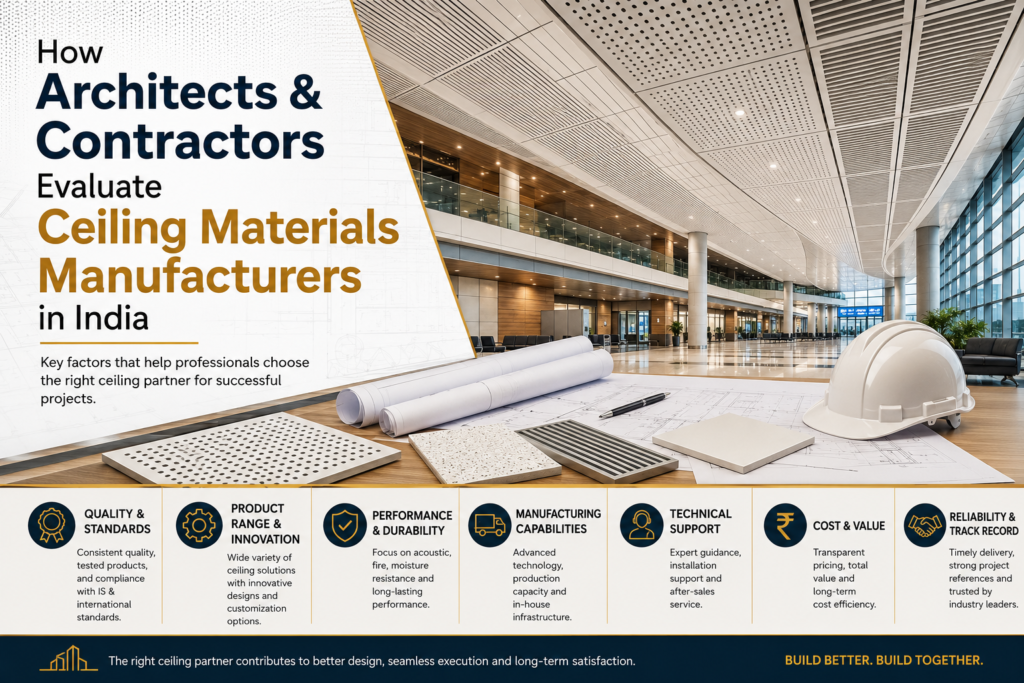
In India’s rapidly evolving construction landscape, architects and contractors play a pivotal role in shaping built environments that are both aesthetically pleasing and functionally robust. There are numerous decisions that come with a successful project, but picking the right ceiling materials isn’t given enough attention.
In addition to aesthetics, ceilings can impact acoustics, thermal comfort, fire safety, durability, and maintenance costs. The professionals have to be very careful when considering ceiling material manufacturers.
In this article, we discuss the important considerations why architects and contractors evaluate ceiling manufacturers in India. This also guarantees that they join forces with the most effective ceiling materials supplier in India.
1. Product Quality and Performance Standards
The first and foremost detail that matters when it comes to selecting ceiling materials is the degree of their quality. Architects and contractors test the strength, durability, and suitability of the materials under Indian conditions.
Products like gypsum boards, PVC panels, metal ceilings, and fiber cement tiles must perform well in heat, humidity, and daily use. They undergo close testing for fire resistance, water resistance, sound control, and load strength. The professionals use sample products and lab test reports to determine the long-term reliability.
2. Adhering to Building Codes & Certifications
Safety, quality, and sustainability are important issues addressed in building rules in India. Architects prefer manufacturers that follow Indian standards and hold trusted certifications like ISO for quality and environmental management.
A fire-rated ceiling, low-VOC materials, and termite-resistant materials are particularly critical. All these regulations must be followed by a reliable ceiling materials supplier in India to minimize risk and get approvals for a project. In addition, certified products lead to greater trust and value added for the building.
3. Material Range and Customization
A different ceiling solution is required for different projects. Hospitals need hygienic ceilings, offices need acoustic control, and homes need attractive designs. That’s why architects prefer manufacturers offering many options such as gypsum boards, PVC panels, metal ceilings, mineral fibre panels, and decorative tiles. This is also the case with customization. Sizes, colors, textures, and designs can be varied to precisely fit the design and needs of a project.
4. Technical Support and Expertise
Solid technical support is an essential attribute to help in the construction scene. One of the many problems to be solved by architects and contractors is how to fit lights, HVAC systems, or access panels into ceilings. Manufacturers with expert technical teams assist with site advice, installation guidance, and problem-solving support.
Manuals, drawings, and technical documents that are clear also prevent error. When it comes to the technical aspect, it guarantees faster installation, fewer errors, and better outcomes of the project.
5. Price Competitiveness And Value Engineering
Planning a budget is important to any project. The main concern is quality, but architects and contractors are seeking ceiling materials with the greatest value for money. A fair price must be provided, including a breakdown of costs, and long-term cost savings are desired.
Value engineering is the process of providing creative options that remove the expense without sacrificing function. The open pricing and lifecycle cost estimations assist experts to make informed and cost-effective decisions.
6. Delivery Timelines and Supply Chain Reliability
On-time installation of ceilings is essential to on-time projects. Any delay will escalate costs and lead to slower construction. Architects and contractors prefer manufacturers with strong supply chains, sufficient stock, and reliable delivery timelines.
This is particularly relevant for projects in smaller-sized cities. Manufacturers with wide distributor networks and clear order tracking build trust and help ensure smooth project execution.
7. Track Record and References
The previous projects of the manufacturer speak louder than what they market. When deciding, architects and contractors review completed projects, company portfolios, and client feedback. Composing the materials in the ceiling and observing them in action at the site can be part of assessing performance and the appearance or feel of the finished ceiling.
When industry peers are enthusiastic about you, and your online score is good, that builds confidence. Reliability and professionalism are evident in a successful track record across residential, commercial, and institutional projects.
8. After-Sales Service and Warranty
Post-sale service is essential for coming back peacefully. Ceiling materials should be accompanied by a clear warranty with regard to sagging, cracking, or damage to the surface. Architects and contractors value manufacturers who respond quickly to complaints and provide proper support after installation.
Having good warranty policies and service to respond to indicates that the manufacturer has products they are confident in and have confidence in long-term relationships, rather than short-term profits.
Why Should Gypsonite Be Your Top Choice?
Regarding each of the above qualities, performance, innovation, and sustainability, Gypsonite is a top ceiling materials supplier in India regarding supply services all over the country.
Gypsonite has decades of experience, world-class manufacturing standards, and a wide variety of ceiling solutions that cater to the differing requirements of contemporary architecture, the architect and contractor partner of choice for superior ceilings.
Choose Gypsonite, enhance your spaces with ceilings that deliver lasting beauty, performance, and value. Contact Gypsonite today to discuss your next project!
Conclusion
It’s no small effort when it comes to picking a ceiling materials manufacturer in India, particularly for architects and builders. It is a process of multidimensional technical assessment that takes into account the product performance, compliance, customization, technical support, logistics, cost-effectiveness, sustainability, and after-sales service.
The ceiling is a hidden star that contributes to everyday space comfort, beauty, acoustics, and safety. Therefore, working with a reliable ceiling materials supplier in India becomes paramount to witnessing excellence within every project.