
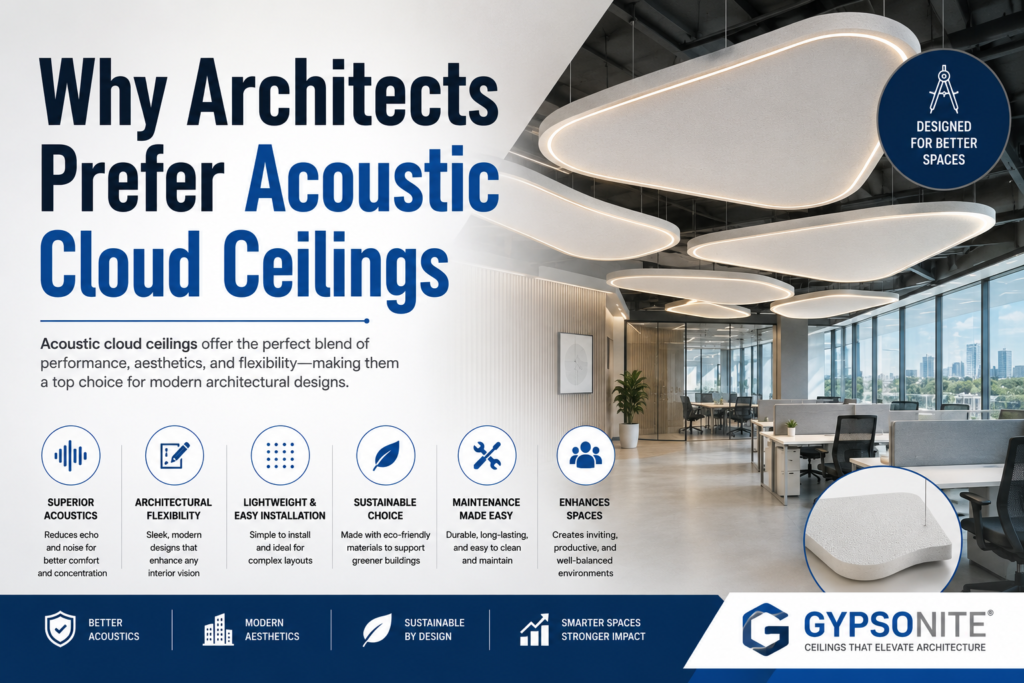
Today ceilings are not merely structural requirements; they become an integral tool of architectural design and performance. Among the most preferred solutions today is the acoustic cloud ceiling, a system that perfectly blends aesthetics, sound control, and design flexibility.
Architects are increasingly using acoustic cloud ceilings for both aesthetic and functional objectives in corporate offices, auditoriums, restaurants, and schools, among others.
The demand for better acoustics, a modern interior aesthetic, and flexible ceiling solutions that are sustainable is fueling this shift. Let’s delve into detail about why architects use acoustic cloud ceilings for modern projects.
What is an acoustic cloud ceiling?
An acoustic cloud ceiling is a system of panels or “clouds” suspended under the main ceiling. These panels float apart from the traditional continuous ceilings, giving a visual depth while effectively absorbing sound. They come in various shapes, sizes, colors, and materials and can be arranged in unique ceiling designs while maintaining acoustical quality.
1. Superior Sound Absorption & Noise Control
Architects prefer acoustic cloud ceilings for their outstanding ability to control sound in open environments. Comfort and communication are impacted in large spaces by echo and reverberation. Acoustic cloud panels block noise from all angles while enhancing speech clarity, making them ideal for noise control. They are perfect for open-plan offices, lecture halls, conference rooms, restaurants, and cafés where acoustic comfort affects productivity and user experience.
2. Design Freedom & Visual Impact
Architects have full creative control with acoustic cloud ceilings. Instead of flat, conventional ceilings, designers can create floating patterns, layered forms, and artistic layouts that enhance visual interest. These ceilings are no longer just a part of the wall but rather a part of the design. With multiple shapes, colors, and heights available, acoustic clouds help achieve modern aesthetics, effective zoning, and strong visual branding within interior spaces.
3. Ideal for High & Open Ceilings
Traditional ceilings are often impractical in spaces that have exposed services or a high slab. Acoustic cloud ceilings offer an intelligent solution that provides specific sound absorption without the need to cover the entire ceiling. They are often incorporated by architects in industrial buildings, commercial lobbies, airports, and malls. They preserve an open, airy feel while ensuring acoustic comfort, making large spaces more functional and pleasant.
4. Easy Integration with Lighting & HVAC
Acoustic cloud ceilings can be incorporated into lighting, sprinklers, and HVAC systems. Panels can be installed around fixtures without obstructing airflow and/or function. This enables the architect to showcase lighting designs, keep efficient ventilation, and not have to make complex adjustments to the ceilings. This leads to a harmonious ceiling design that is visually pleasing, functional, and technically sound, while still complementing the interior design.
5. Sustainable & Eco-Friendly Choice
Acoustic cloud ceilings are an important part of modern architecture, and they play a role in achieving sustainability goals. Acoustic cloud ceilings are relevant to modern architecture and contribute to the sustainability of buildings. Many panels consist of low-VOC, recyclable material to enhance the indoor environment quality. Energy-saving solutions, LEED and green certification, and healthier interior conditions are all preferred by architects. Acoustic cloud ceilings fulfill these requirements and are designed to be environmentally responsible and future-proof ceiling solutions.
6. Lightweight & Easy Installation
The Acoustic Cloud Ceiling system is lighter than a traditional ceiling system, which minimizes the loading of the building structure. They also have easy suspension systems that enable quicker installation, ensuring that projects remain on schedule. Easy maintenance, as each panel is accessible or can be replaced without disturbing the ceiling. These benefits make acoustic cloud ceilings a convenient and timesaving option for architects and contractors.
7. Enhances Space Zoning Without Walls
In bigger open areas, architects utilize ceiling design for establishing areas. Use acoustic cloud ceilings to create visual barriers between work areas, meeting areas, or dining spaces without the need for walls. The cloud changes in form to subtly influence movement and usage but retains openness. This solution allows for flexible layouts, acoustic properties, and spatial organization without sacrificing the sense of openness.
8. Customization for Brand & Identity
Acoustic cloud ceilings are highly customizable, making them a perfect fit for brand-driven interiors. Architects can create ceilings with a specific suite of colors, shapes, or patterns to match a company’s identity. This is particularly beneficial for corporate headquarters, retail outlets, and creative studios. Custom Acoustic Clouds can be used to add personality to a room with a design that will still provide excellent sound control and a modern look.
Conclusion
The popularity of the acoustic cloud ceiling is an attribute that cannot be ignored. Architects choose it for its superior sound control, design versatility, sustainability, and adaptability to modern spaces. From improving acoustics and elevating visual appeal to aiding in environmentally friendly building practices, acoustic cloud ceilings have got you covered.
Acoustic cloud ceilings, like those driven by Gypsonite, are the logical choice for architects looking for high-performance ceilings that are both beautiful and functional. Enhance your interiors with Gypsonite’s Acoustic Cloud Ceiling solutions, designed to achieve smarter, sound better. Choose Gypsonite for ceilings architects trust.
FAQs
1. What spaces are best suited for an acoustic cloud ceiling?
An acoustic cloud ceiling is the perfect ceiling solution for offices, auditoriums, restaurants, schools, and other commercial areas that require sound control and aesthetics.
2. Is there an acoustic ceiling that can be used in exposed ceilings?
Yes, Acoustic Cloud Ceilings work great with exposed ceilings because they absorb sound without the addition of any structural or mechanical parts.
3. Are acoustic cloud ceilings customizable?
Absolutely. They come in different shapes, sizes, colors, and designs to complement architectural designs and the branding of the organization.
4. Do acoustic cloud ceilings help with sustainability goals?
Yes, many systems feature recyclable components and enhance acoustic comfort in the interior, which contributes to green building and sustainability standards.
5. Why choose Gypsonite for acoustic cloud ceiling solutions?
Gypsonite provides quality, architect-approved acoustic cloud ceiling systems that deliver superior performance, design flexibility, and support.